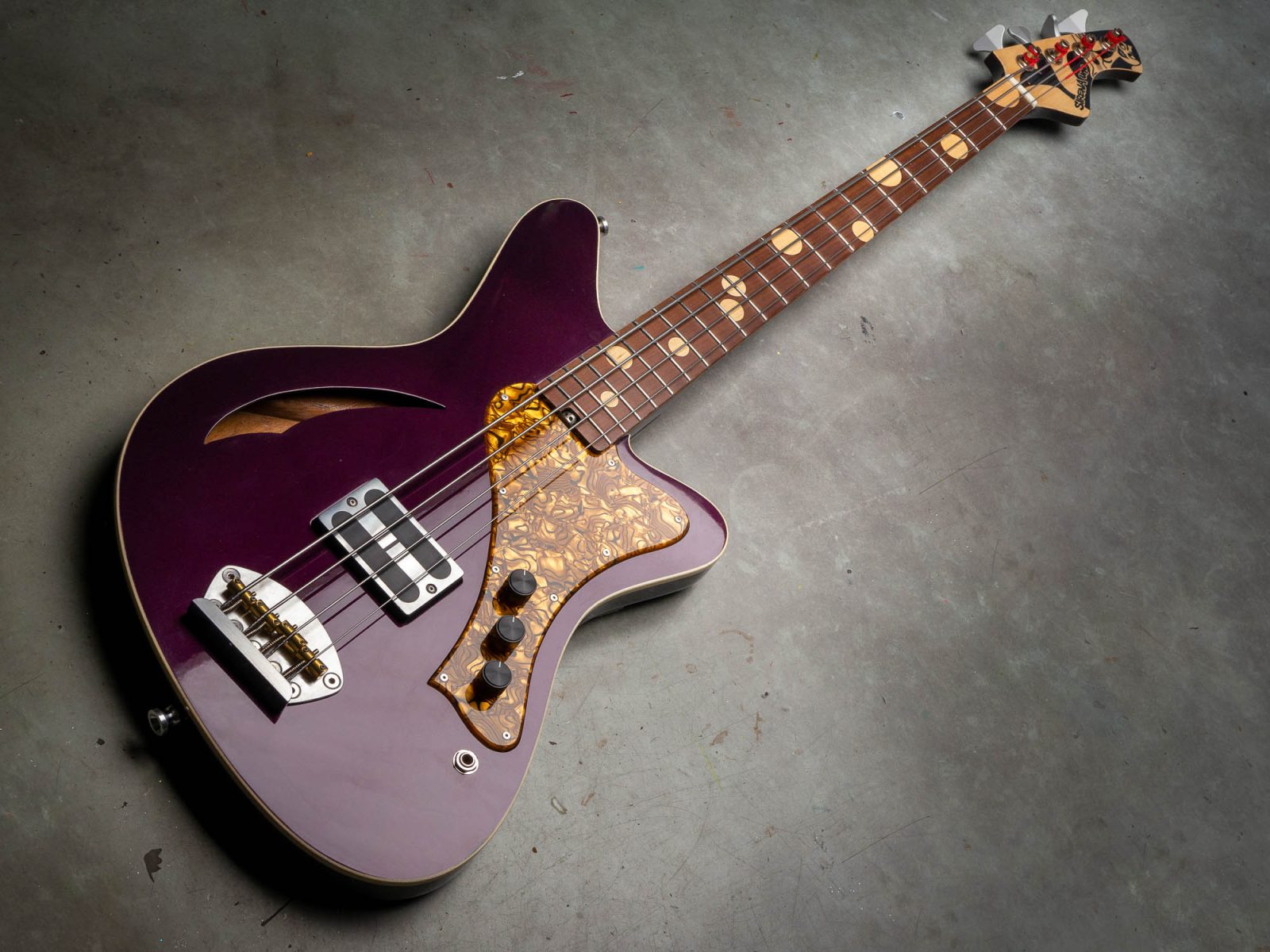
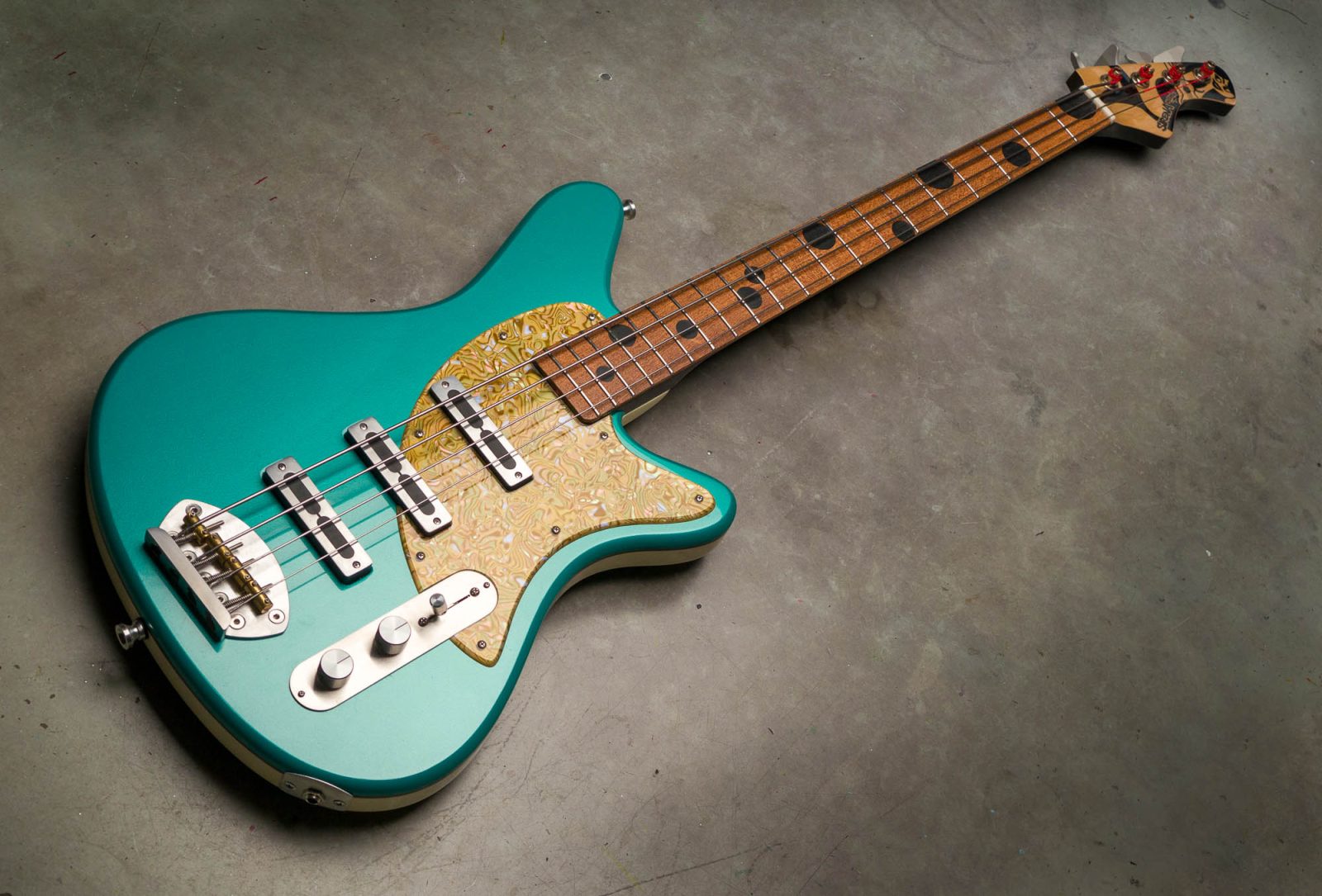
2014-2025: Sirena Musical Instruments
I took a break from making art for about ten years while I fell into a very deep rabbit hole of building musical instruments. I wanted a sparkly orange Jazz Bass. I couldn’t afford one, so I figured I could build one myself. I ended up becoming a professional luthier. It was an accident, I swear.

I started out by building a few parts basses. I joined a few builders forums to get some advice. There was a guy on the internet named Bruce Johnson. World-class luthier. Retired aerospace engineer / Disney Imagineer. Very generous with advice. Turns out his shop was two blocks from my house. I went down there to talk to him, and next thing you know, I was subletting a space in his shop and doing his overflow work.
I got into building custom and otherwise impossible-to-find replacement necks for years. Designed/engineered and built my own instruments including the machinery and tooling to make them. I was trying to thread the needle between vintage weirdness and instruments for working players – guys like me. My favorite, the Sirena Uno, was a semi-hollow offset-body bass with my own replica of a Peavey T-40 pickup placed in the MusicMan StingRay bridge position. Sold a few basses. Got a few features in a couple of online bass magazines. Business skyrocketed during the pandemic, and basically dropped to zero immediately after. I closed the shop, and I still don’t have a sparkly orange Jazz Bass.
There is a common misconception that luthiery is a form of artistry. It is not. Much of it consists of unromantic, repetitive, technically and physically demanding tasks of mundane execution. That being said, certain aspects of designing an instrument could be considered artistic. And let me be clear: designing a musical instrument is an enormous challenge built upon hundreds of decisions, each of which introduces the possibility of catastrophic failure. Ironically, pickup-making—the most technical element in terms of hard science—involves using simple elements—magnets and copper wire—to literally sculpt an electromagnetic field into a shape that produces a desired effect.
Ultimately, the best part of building an instrument is understanding that you’re creating a tool whose sole purpose is to assist someone in creating joy for someone else.